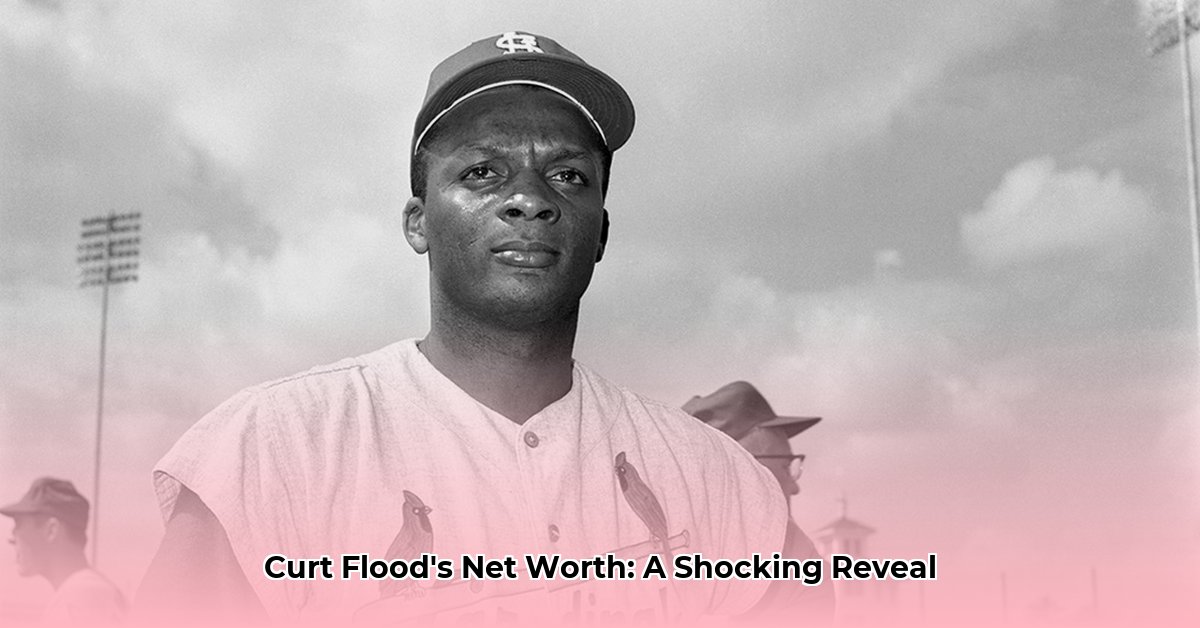
Curt Flood Net Worth: A Legacy Beyond the Bank Account
Curt Flood. The name resonates even beyond the confines of dedicated baseball fandom. He was more than just a seven-time Gold Glove winner and a .293 career hitter; he was a man who challenged the very foundations of Major League Baseball, forever altering the game's landscape. While pinpointing his exact net worth proves elusive – detailed financial records from that era are scarce – the true measure of his value lies far beyond his bank account. This isn't merely a story of finances; it's a narrative of courage, sacrifice, and the unwavering pursuit of justice.
A Star Player's Unexpected Fight
Flood's on-field achievements were undeniable. Seven consecutive Gold Gloves, three All-Star appearances, and contributions to a couple of World Series victories solidified his status as a star for the St. Louis Cardinals. This success translated into a respectable salary, yet even that couldn't fully shield him from the oppressive realities of baseball's reserve clause – a system that bound players to their teams indefinitely, effectively limiting their negotiating power and mobility. This inherent inequality ignited a fire within Flood, fueling his determination to challenge the status quo. Was this a financially driven decision? The answer is far more nuanced.
The Turning Point: A Trade and a Bold Stand
The year was 1969. Traded to the Philadelphia Phillies, Flood responded with an unprecedented act of defiance: he refused to play. This wasn't a simple salary dispute; it was a powerful stand against a system that treated players as mere commodities, not individuals with rights and agency. His subsequent legal battle, Flood v. Kuhn, aimed to dismantle the reserve clause, taking his case all the way to the Supreme Court. While he lost the legal battle, his moral victory was undeniable. His lawsuit acted as a catalyst, igniting a movement that fundamentally reshaped the power dynamic between players and owners.
The Financial Toll of Standing Up For What's Right
Flood's principled stand came at a significant personal cost. The legal battle was financially draining, significantly impacting his net worth. While precise figures remain unavailable, it's clear that his post-retirement financial situation, including significant legal fees, was far less opulent than many modern-day major leaguers. His potential earnings, had he continued playing and not risked this battle, are impossible to fully assess retrospectively. His true wealth, however, was woven into the fabric of his actions and their enduring consequence.
More Than Money: A Legacy of Courage and Principle
Curt Flood's legacy extends far beyond any financial assessment. He possessed extraordinary courage, challenging a deeply entrenched system that few dared to oppose. How many other players might privately have held the same sentiments, but lacked the conviction to act? He gave a voice to his fellow players, a power they hadn't possessed previously. His enduring worth isn't in a bank account, but in the profound impact his actions had on future generations of ballplayers.
A Lasting Impact: Free Agency's Unsung Architect
Flood’s legal fight, though personally costly, created a legacy that extends far beyond his lifetime. The financial sacrifices he made were instrumental in securing greater freedom and fairer treatment for present and future MLB players. His courageous act set a precedent and paved the way for collective bargaining and free agency, rights that modern players take for granted. His name now symbolizes courage, conviction, and the ongoing fight for fair play – a legacy far more valuable than any monetary sum.
How did Curt Flood's legal battle impact subsequent MLB player contracts?
Key Takeaways:
- Flood's legal challenge, while legally unsuccessful, fundamentally altered the power dynamic between players and owners.
- His fight catalyzed the movement that ultimately led to free agency and the dismantling of the reserve clause.
- The subsequent shift to free agency significantly increased player salaries, creating a more equitable economic system in MLB.
- Flood’s personal financial sacrifices highlight his dedication to improving the well-being of players.
- His legacy transcends his on-field accomplishments, establishing his position as a transformative figure in the fight for athlete’s rights.
The Reserve Clause: A System of Oppression
Prior to Flood's challenge, the reserve clause stifled player autonomy and leverage. This system ensured that players were effectively locked into contracts with their teams indefinitely. This meant limited negotiating power and severely restricted earning potential. How did Flood's legal battle change this unfair system? His challenge shook the foundations of this decades-old practice leading to a more equitable environment.
Flood's Defiance: A Turning Point
Flood's refusal to accept a trade to the Philadelphia Phillies in 1969 served as a defining moment. This principled action ignited a pivotal legal battle, Flood v. Kuhn, which challenged the legality of the reserve clause under antitrust laws. Although the case ended in a legal defeat for Flood, his courageous stand resonated powerfully with the players and fans.
The Ripple Effect: Free Agency and Evolving Economics
While Flood did not win his legal case, the discourse sparked by his challenge played a crucial role in subsequent legal battles and negotiations. The reserve clause, ultimately dismantled, paved the way for free agency, granting players greater control over their careers and a vastly improved capacity for negotiating higher salaries. The average MLB player salary skyrocketed, a direct result of the shifts initiated by Flood's actions.
Beyond the Dollars: A Legacy of Principle
Flood’s impact extends beyond the financial realm; it is deeply rooted in his commitment to justice and fairness. He became a powerful symbol, inspiring generations of athletes to advocate for equitable treatment and better conditions. His legacy transcends baseball, standing as a testament to the power of individual conviction in the face of overwhelming odds.